



Potassium Channel
KcsA
Potassium channels are the most widely distributed type of ion channel and are found in virtually all living organisms. They form potassium-selective pores that span cell membranes. Potassium channels are found in most cell types and control a wide variety of cell functions. Potassium channels function to conduct potassium ions down their electrochemical gradient, doing so both rapidly and selectively. Biologically, these channels act to set or reset the resting potential in many cells. In excitable cells, such asneurons, the delayed counterflow of potassium ions shapes the action potential. By contributing to the regulation of the action potential duration in cardiac muscle, malfunction of potassium channels may cause life-threatening arrhythmias. Potassium channels may also be involved in maintaining vascular tone.
All Product Categories
-
Potassium Channel Inhibitors
(672)
View all products
-
Potassium Channel Agonists
(31)
View all products
-
Potassium Channel Antagonists
(39)
View all products
-
Potassium Channel Activators
(240)
View all products
-
Potassium Channel Modulators
(39)
View all products
-
Potassium Channel Chemical
(1)
View all products
-
Potassium Channel Controls
(11)
View all products
-
Potassium Channel Related Products (1125)
Related Products (1125)

-
Antibodies (6)
-
Related Compound Screening Libraries (1)
-
α-Dendrotoxin
 0 ImagesCat. No.: HY-P2707CAS No.: 74504-53-3Synonyms: α-DTXα-Dendrotoxin (α-DTX) is a voltage-gated K+ channel blocker and an acid-sensing ion channel (ASIC) inhibitor. α-Dendrotoxin blocks Kv1.1, Kv1.2, Kv1.6 and D-type (ID) voltage-gated K+ channels, and reversibly inhibits slowly inactivating potassium currents. α-Dendrotoxin induces epilepsy-related behaviors in mice. α-Dendrotoxin can be used in studies related to tonic-clonic seizures.
-
Kv3.1 activator-1
 0 ImagesCat. No.: HY-184663Kv3.1 activator-1 is a Kv3.1 voltage-gated potassium channel activator. Kv3.1 activator-1 exhibits distinct activating efficacy in both thallium flux assays and automated patch-clamp electrophysiological assays .
-
(R)-SKF 38393 hydrochloride
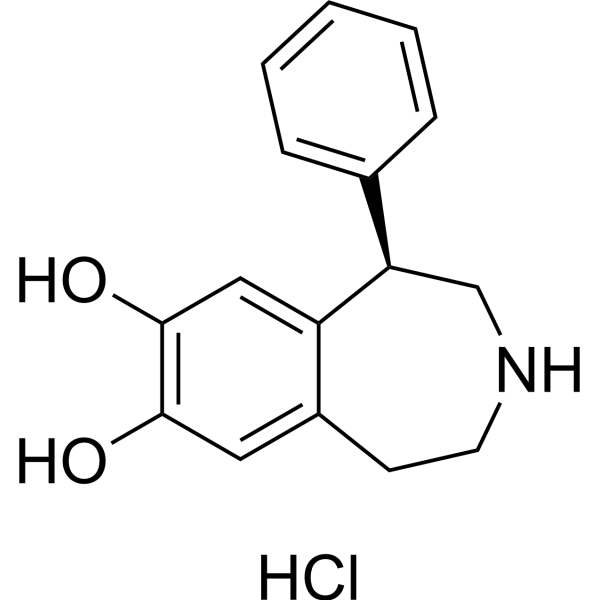 0 ImagesCat. No.: HY-12520BCAS No.: 81702-42-3Synonyms: (±)-SKF-38393 hydrochloride; SKF-38393A hydrochloride(R)-SKF 38393 ((±)-SKF-38393) hydrochloride is a potent and selective D1 dopamine receptor antagonist. (R)-SKF 38393 hydrochloride inhibits G protein-coupled inwardly rectifying potassium (GIRK) channel.
-
Quinine sulfate hydrate (Standard)
 0 ImagesCat. No.: HY-W010668RCAS No.: 6119-70-6Quinine (sulfate hydrate) (Standard) is the analytical standard of Quinine (sulfate hydrate). This product is intended for research and analytical applications. Quinine sulfate hydrate (2:1:4) is an orally active alkaloid extracted from cinchona bark and can be used in anti-malarial studies. Quinine sulfate hydrate (2:1:4) is a potassium channel inhibitor that inhibits WT mouse Slo3 (KCa5.1) channel currents evoked by voltage pulses to +100?mV with an IC50 of 169 μM.
-
GSK-588045
 0 ImagesCat. No.: HY-10800CAS No.: 876922-98-4GSK-588045 is a potent 5-HT(1A/B/D) receptor antagonist. GSK-588045 shows high degree of selectivity over human ether-a-go-go related gene (hERG) potassium channels. GSK-588045 can be used for the research of neurological disease, such as depression and anxiety.
-
(2R)-Mitiglinide-d5 calcium
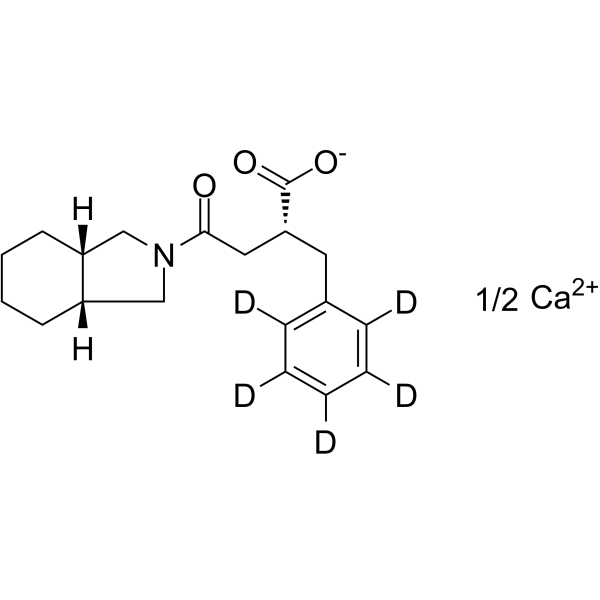 0 ImagesCat. No.: HY-B0682S1(2R)-Mitiglinide-d5 (calcium) is deuterium labeled Mitiglinide. Mitiglinide (KAD-1229), an insulinotropic agent, is an ATP-sensitive K+ (KATP) channel antagonist. Mitiglinide is highly specific to the Kir6.2/SUR1 complex (the pancreatic beta-cell KATP channel). Mitiglinide can be used for the research of type 2 diabetes.
-
Menin–KMT2A-IN-1
 0 ImagesCat. No.: HY-170832Menin–KMT2A-IN-1 (Compound 20) is the inhibitor for menin–KMT2A that binds to menin with an IC50 of 8 nM, and inhibits the interaction between menin and lysine methyltransferase 2A (KMT2A). Menin–KMT2A-IN-1 inhibits hERG with an IC50 of 65 μM. Menin–KMT2A-IN-1 inhibits cell MV4-11 with an IC50 of 74 nM. Menin–KMT2A-IN-1 exhibits good pharmacokinetic characteristics in CD-1 mouse with an orally bioavailability of 74%.
-
L-735821
 0 ImagesCat. No.: HY-117174CAS No.: 170228-29-2L-735821 is a Potassium channel blocker and an antagonist of IKs. L-735821 inhibits the KCNQ1 channel activity with an EC50 of 0.08 μM. L-735821 can increase IKs and IKr current-voltage relations in rabbit ventricular myocytes. L-735821 fully abolishes IKs in isolated human ventricular myocytes at 100 nmol/L. L-735821 can easily enter single myocytes.
-
Kv3.1 activator-2
 0 ImagesCat. No.: HY-184582Kv3.1 activator-2 is a Kv3.1 voltage-gated potassium channel (potassium channel) activator with concentration-dependent activity. Kv3.1 activator-2 opens Kv3.1 potassium channels, increases channel current amplitude, and exerts a positive channel activation effect. Kv3.1 activator-2 can be used in the research of neurological diseases.

-
Cavutilide
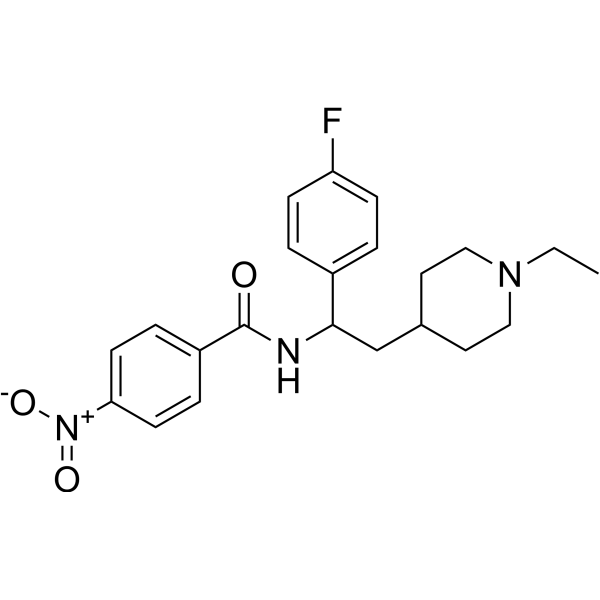 0 ImagesCat. No.: HY-147256CAS No.: 1276186-19-6Synonyms: Niferidil free baseCavutilide (Niferidil (free base)) is a class III antiarrhythmic agent that inhibits hERG K+ channel. Cavutilide has the potential for the study of persistent atrial fibrillation.

-
Quinidine polygalacturonate
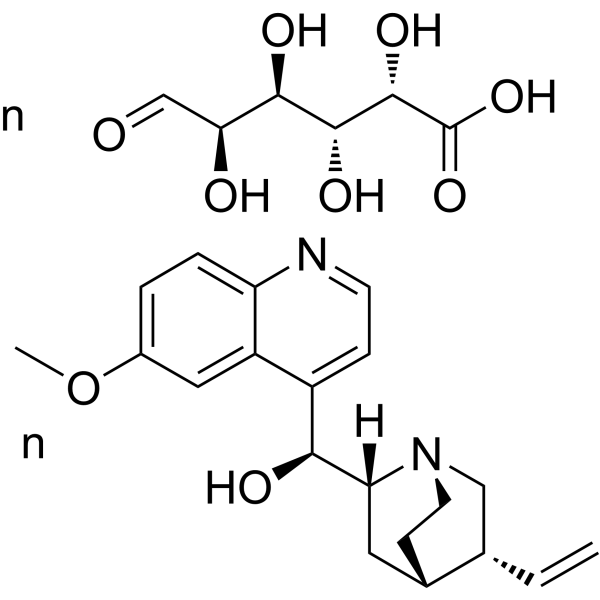 0 ImagesCat. No.: HY-B1751ECAS No.: 27555-34-6Quinidine polygalacturonate is an orally active antiarrhythmic agent. Quinidine polygalacturonate reduces the expression level of P-gp, inhibits P-gp-mediated efflux, increases the intracellular accumulation of P-gp substrates, induces PARP cleavage and Caspase-3 activation, and elevates the proportion of Apoptotic cells at the sub-G1 phase. Quinidine polygalacturonate exerts sustained block and open-channel block effects on IK(f). Quinidine polygalacturonate alters the urinary metabolic ratio of Amphetamine, modulates the Pentylenetetrazol-induced seizure threshold, and regulates the anticonvulsant effect of Dextromethorphan. Quinidine polygalacturonate can be used in studies related to uterine sarcoma and seizures.
-
SCH-23390 maleate
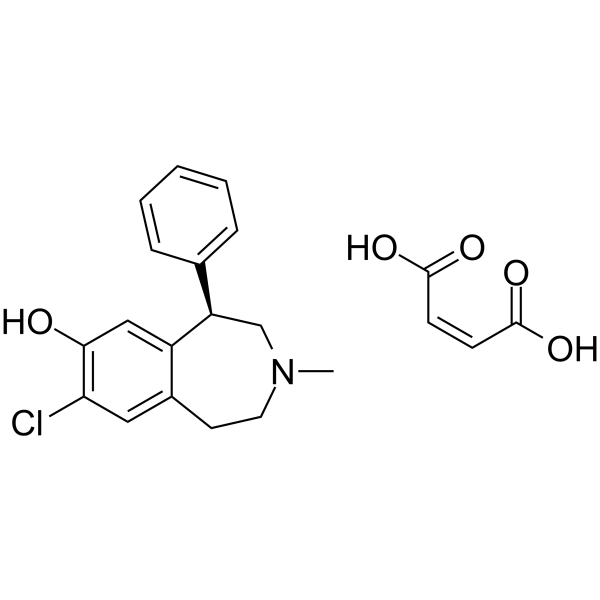 0 ImagesCat. No.: HY-108400CAS No.: 87134-87-0Synonyms: R-(+)-SCH-23390 maleateSCH-23390 maleate (R-(+)-SCH-23390 maleate) is a potent and selective dopamine D1-like receptor antagonist with Kis of 0.2 nM and 0.3 nM for the D1 and D5 receptor, respectively. SCH-23390 maleate is a potent and high efficacy human 5-HT2C receptor agonist with a Ki of 9.3 nM. SCH-23390 maleate also binds with high affinity to the 5-HT2 and 5-HT1C receptors. SCH-23390 maleate inhibits G protein-coupled inwardly rectifying potassium (GIRK) channels with an IC50 of 268 nM.
-
Tedisamil
 0 ImagesCat. No.: HY-126704CAS No.: 90961-53-8Synonyms: KC-8857Tedisamil (KC-8857) is an antiarrhythmic compound with important biological activities. Tedisamil exhibits a significant slowing effect on heart rate, which is achieved by inhibiting the transient outward potassium current (I(to)) in the atrium. Tedisamil inhibits multiple potassium currents, including IK, K(ATP), and PKA-activated chloride channels, thereby prolonging the cardiac action potential and QT interval, and increasing cardiac reentry. Tedisamil has antiarrhythmic effects on ventricular arrhythmias and atrial flutter in animal models.
-
Amiodarone-d5 hydrochloride
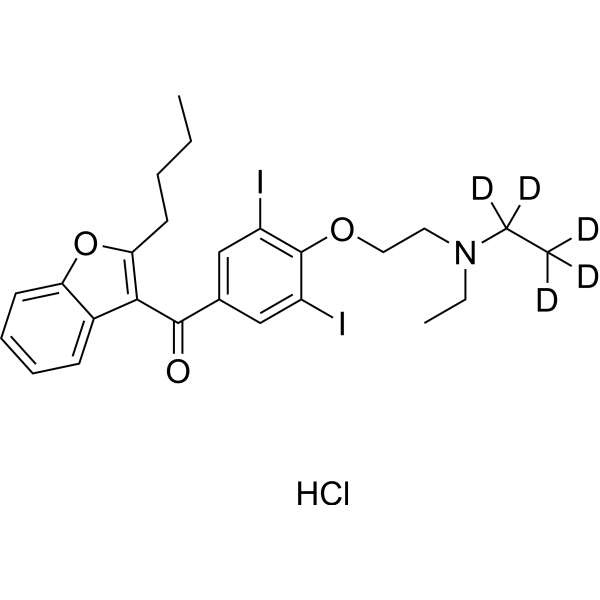 0 ImagesCat. No.: HY-14187S1Amiodarone-d5 hydrochloride is deuterated labeled Amiodarone (HY-14187). Amiodarone is an antiarrhythmic agent for inhibition of ATP-sensitive potassium channel with an IC50 of 19.1 μM.
-
P-1060
 0 ImagesCat. No.: HY-105466CAS No.: 60559-94-6P-1060 is a potassium channel opener. P-1060 can be used for the research of cardiovascular disease.
-
RuBi-4AP
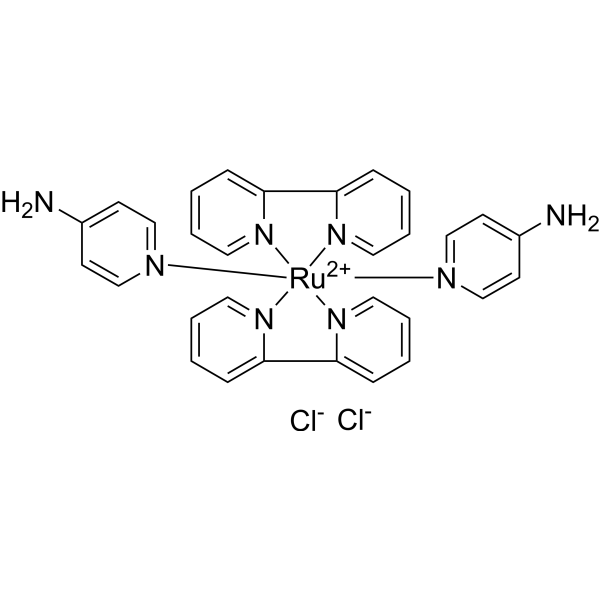 0 ImagesCat. No.: HY-108578CAS No.: 851956-02-0RuBi-4AP, a derivative of 4-aminopyridine (4AP; HY-B0604), is a caged Kv channel blocker. RuBi-4AP contains a photolabile protecting group, allowing its effect to be controlled precisely in both space and time with light. RuBi-4AP can be used for the research of neuronal excitability, synaptic transmission, and signal propagation.
-
Oxybutynin chloride (Standard)
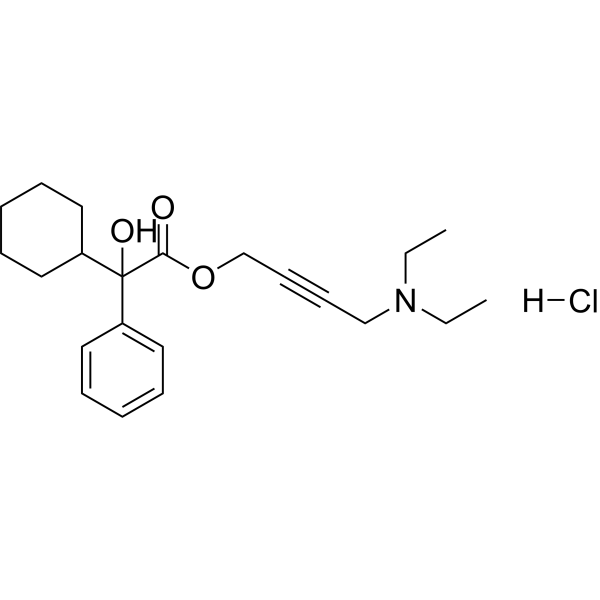 0 ImagesCat. No.: HY-B0267ARCAS No.: 1508-65-2Oxybutynin (chloride) (Standard) is the analytical standard of Oxybutynin (chloride). This product is intended for research and analytical applications. Oxybutynin chloride is an oral active and competitive mAChR antagonist with Kis of 14.3 and 5.55 nM for specific [3H]NMS binding in the mouse bladder and cerebral cortex, respectively. Oxybutynin chloride inhibits vascular Kv channels in a manner independent of anticholinergic effect, with an IC50 value of 11.51 μM. Oxybutynin chloride reduces muscle spasm in the bladder and urinary tract, can be used in study of overactive bladder syndrome (OAB). Oxybutynin (chloride) is a click chemistry reagent, it contains an Alkyne group and can undergo copper-catalyzed azide-alkyne cycloaddition (CuAAc) with molecules containing Azide groups.
-
Ropivacaine-d7 hydrochloride
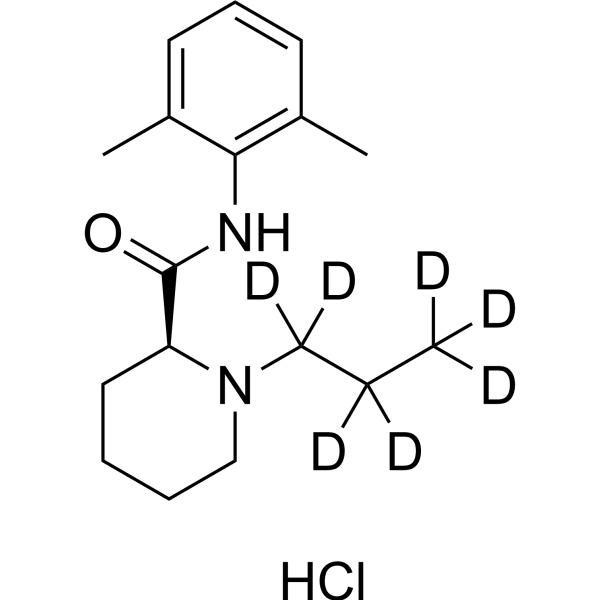 0 ImagesCat. No.: HY-B0563BSCAS No.: 1217667-10-1Ropivacaine-d7 hydrochloride is a deuterium labeled Ropivacaine (hydrochloride) (HY-B0563B). Ropivacaine hydrochloride is a potent sodium channel blocker and blocks impulse conduction via reversible inhibition of sodium ion influx in nerve fibrese. Ropivacaine is also an inhibitor of K2P (two-pore domain potassium channel) TREK-1 with an IC50 of 402.7 μM in COS-7 cell's membrane. Ropivacaine is widely used for neuropathic pain management in vivo.




